Tours every Friday, 8:30 AM — reserve your spot
Your child does not take a Spanish class here. They spend part of every day learning in Spanish and part of it learning in English. Here is how that works.
Schedule a tour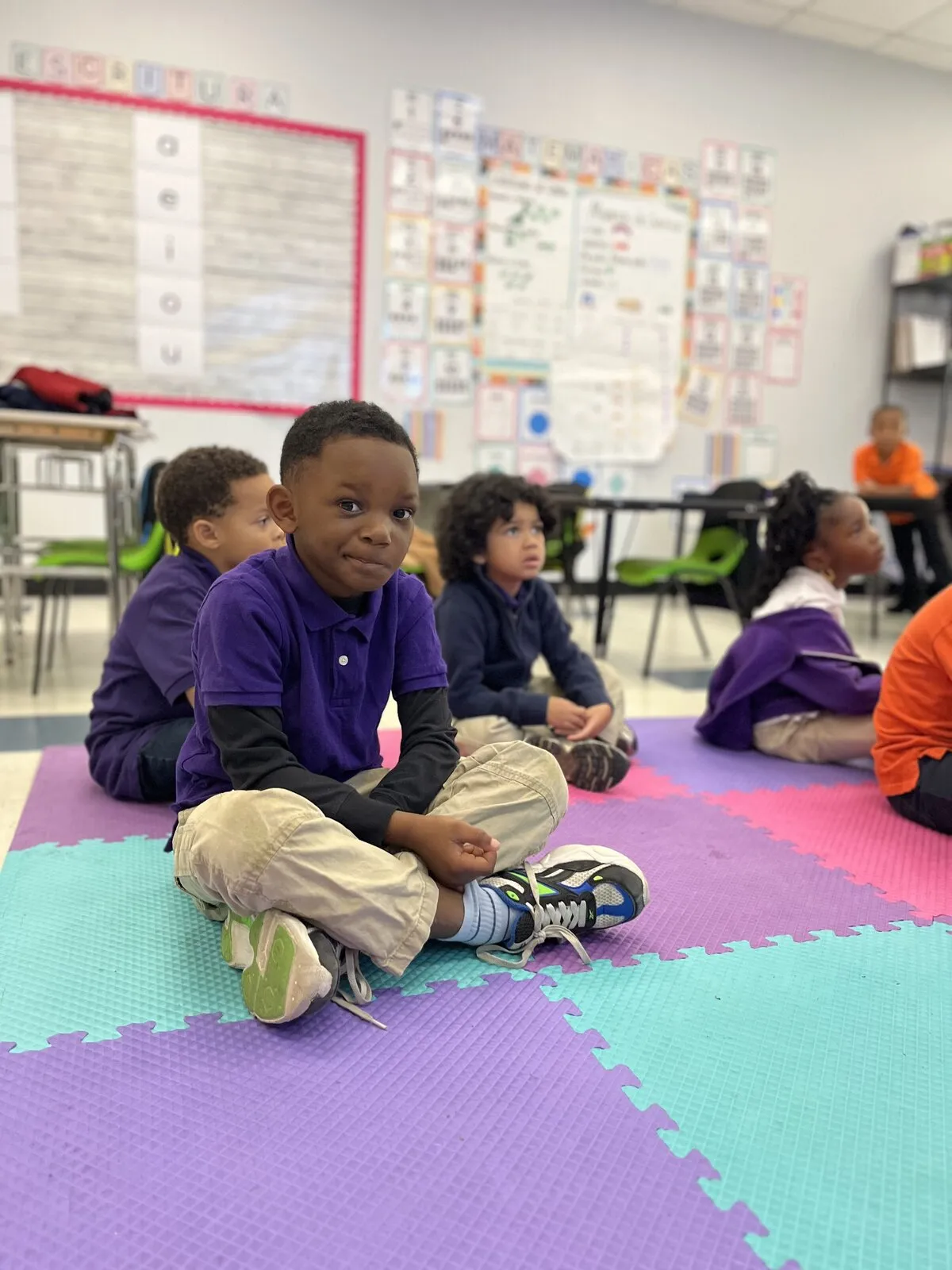
Scholars learn their regular subjects, including reading, math, and science, in both Spanish and English. Spanish is how the lesson is taught, not the lesson itself.
Our youngest scholars spend the most time in Spanish, because that is when picking up a language comes most easily.
Math en español, reading in English, and both taught by teachers who are fluent in the language they are teaching in.
Language carries culture with it. Scholars here grow up at home in both of the worlds they belong to.
Kindergartners spend most of the day in Spanish. Each year after that, a little more of the day moves into English, until the two languages split it evenly.
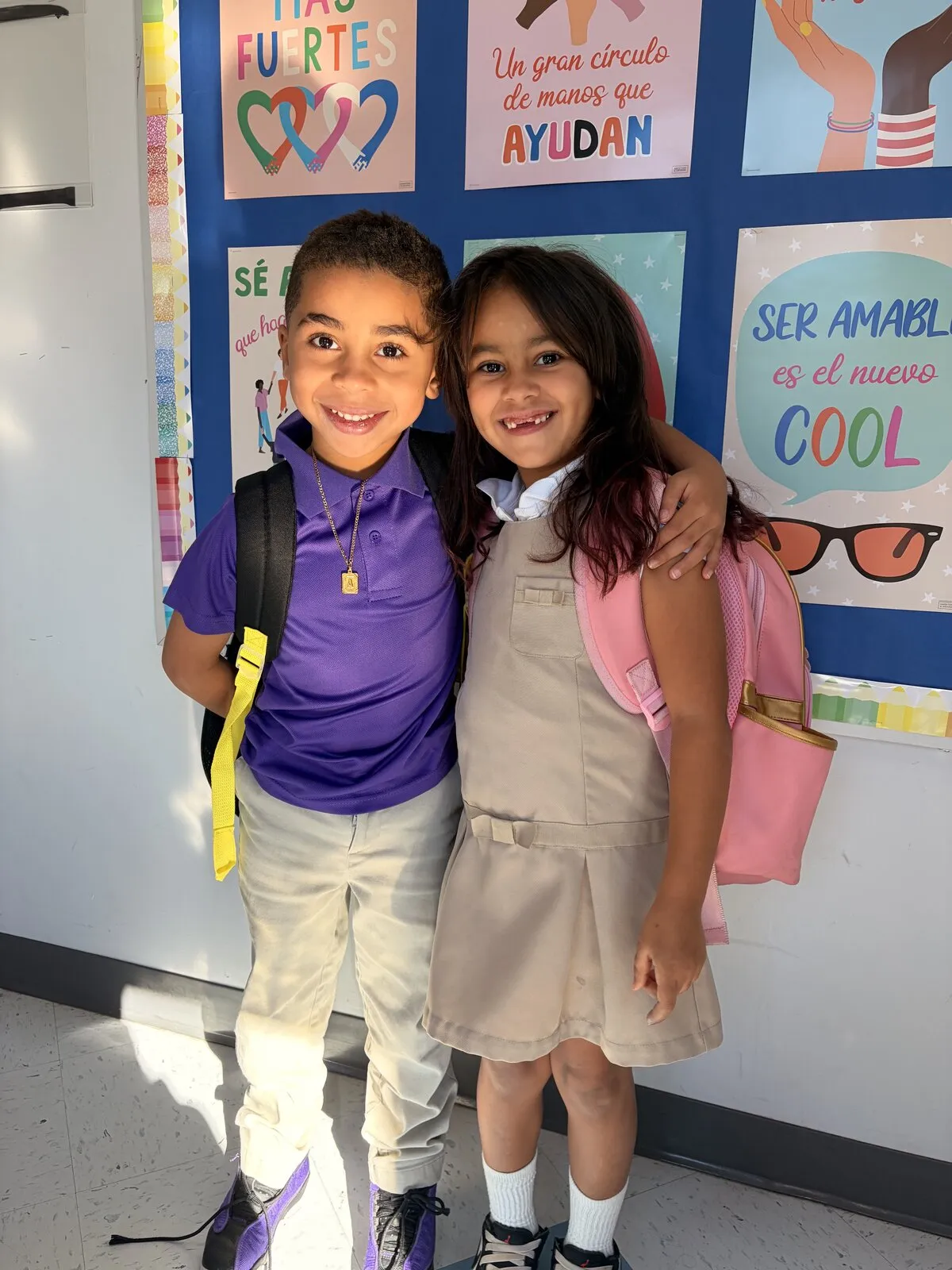
Moving between two languages all day is real mental work, and researchers have found the benefits reach well past language class.
In a randomized study of Portland's dual-language programs, immersion students outperformed peers in English reading by about 7 months of learning in 5th grade and 9 months in 8th grade (Steele et al., RAND, 2017).
Long-term national research finds dual-language scholars meet or exceed the achievement of monolingual-classroom peers by the upper elementary grades — in English (Thomas & Collier).
English learners in dual-language programs reach full English proficiency at higher rates over time than those in English-only classrooms (Umansky & Reardon, 2014).
Reading, writing, and thinking in two languages, on the path to North Carolina's Seal of Biliteracy.
Strong academics in two languages, aligned with the NC Standard Course of Study.
Scholars who move comfortably between cultures and feel at home in both.
No. Honor Prep is a two-way dual language school, which means we enroll Spanish-speaking and English-speaking families on purpose and teach them together. A child who arrives with no Spanish sits beside a child who speaks it at home, and each becomes the other's teacher. Our teachers are trained to make instruction understandable from the first day, through gestures, visuals, routines, and hands-on materials, so your child never has to understand every word to understand the lesson.
This is the question we hear most, and the research is consistent: scholars in well-implemented dual language programs perform as well as or better than their peers in English by the upper elementary grades, and the advantage tends to grow over time. English is never absent from our day; it is taught deliberately and expands each year. In the early grades you may notice a short adjustment period. That is normal, expected, and temporary.
You don't need to. Reading with your child in your home language builds the same vocabulary, comprehension, and background knowledge that transfers directly into their second language; that transfer is one of the best-established findings in bilingual education. We send family guides home in both English and Spanish, and our teachers will never ask you to teach content in a language you don't speak. Read with your child, ask questions, be curious. We'll handle the Spanish.
All of our dual language teachers are credentialed, fluent in Spanish, and trained in immersion instruction. Each grade level has a language allocation tailored to its developmental needs.
We assess in both languages, on a set schedule, and we share the results with you. We use mCLASS DIBELS 8 for early literacy in English and mCLASS Lectura in Spanish, with benchmark windows at the beginning, middle, and end of the year. Families receive a report after each benchmark window, plus a conference to walk through what the data means and what comes next.
Come see a Friday — bring your scholar and your questions.
